Yard Grading and Leveling: Why It Matters and What It Costs
Grading is the invisible job that decides where every drop of rain ends up. Learn the 2 percent rule, the warning signs, and what regrading costs in Ontario in 2026.

The Invisible Job That Decides Everything
Nobody compliments a well graded yard. But grading, the shape and slope of the ground, decides where every drop of rain goes. Get it right and your basement stays dry, your lawn drains, and your patio never heaves. Get it wrong and you fight water for years. We see the second case every week in Oakville, Burlington and the surrounding area.
Grading means shaping the soil. Leveling means smoothing out bumps and dips within that shape. A good yard is level to walk on but never truly flat, because flat ground holds water.
The 2 Percent Rule
Ground beside your house should fall away from the foundation at a slope of at least 2 percent. In plain terms, that is about 2 cm of drop for every metre of distance. Over the first 2 metres from the wall, you want roughly 4 to 5 cm of fall. It looks almost flat to the eye, but it moves water fast. Toward the property lines, shallow ditches called swales carry that water to the street or a rear drainage path.
You can check this yourself in ten minutes. Rest a 2 metre board on the ground with one end at the foundation, set a level on top, lift the outer end until the bubble centres, and measure the gap under it. Less than 4 cm means water is moving too slowly. A gap on the house side means water is running at your foundation.
Signs Your Yard Needs Regrading
- Puddles that sit for a day or more after normal rain.
- Water stains or dampness on basement walls after storms.
- Soil that has settled around the foundation, sloping back toward the house.
- Bare, washed out channels where runoff cuts through the lawn.
- Steps or patios that pond after every shower.
What Grading and Leveling Cost in 2026
- Small fix, one problem area: $500 to $2,000. A few cubic yards of soil, corrected slope along one wall, topped and seeded.
- Full backyard regrade: $3,000 to $8,000. Machine work, fresh soil, compaction, swales, and disposal of the excess.
- New lawn on top: sod runs $1.50 to $3 per square foot installed, so add $1,500 to $4,000 for a typical backyard.
One more thing worth knowing. Grading is regulated on new builds. In Oakville, new homes must follow an approved lot grading plan, and the town requires a grading certificate signed by a land surveyor or professional engineer before securities are released. Those rules exist because bad grading damages houses. Your older yard deserves the same standard.
Grading Comes Before Everything Else
Planning new sod, an interlock patio, or a fence? Fix the grade first. Sod laid on bad grade drowns in the low spots. A patio built on poorly drained clay heaves in the first winter. Fence posts set in saturated soil rot years early. Every solid landscaping project starts at the dirt, which is why we check grade on every estimate, whether you asked about it or not.
Not Sure About Your Slope? We Will Check It
Grab a level and a straight board, or just let us look. We build grading and drainage solutions that move water where it belongs. Start with our online cost calculator, then request a free estimate. And if a new lawn is part of the plan, our guide to sod vs grass seed will help you choose the finish.
Ready to Start Your Project?
Get a free, no-obligation estimate from our experienced team. We serve Oakville, Burlington, Mississauga & surrounding areas.
More Articles
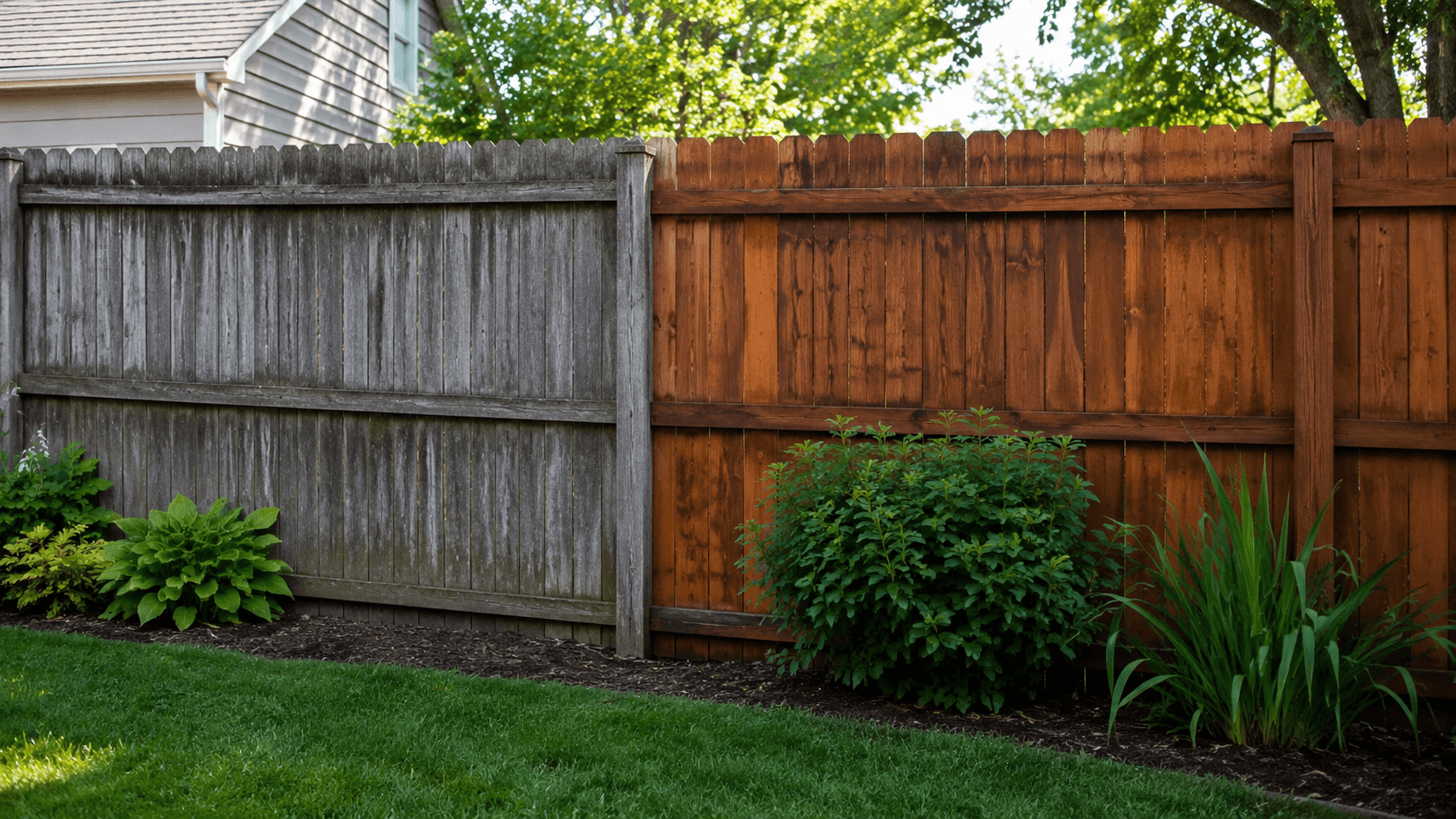
How Long Does a Fence Last in Ontario? Lifespan by Material
Pressure-treated pine gives you 15 to 20 years, vinyl can pass 35. Here is what decides whether your fence hits the high end of the range.
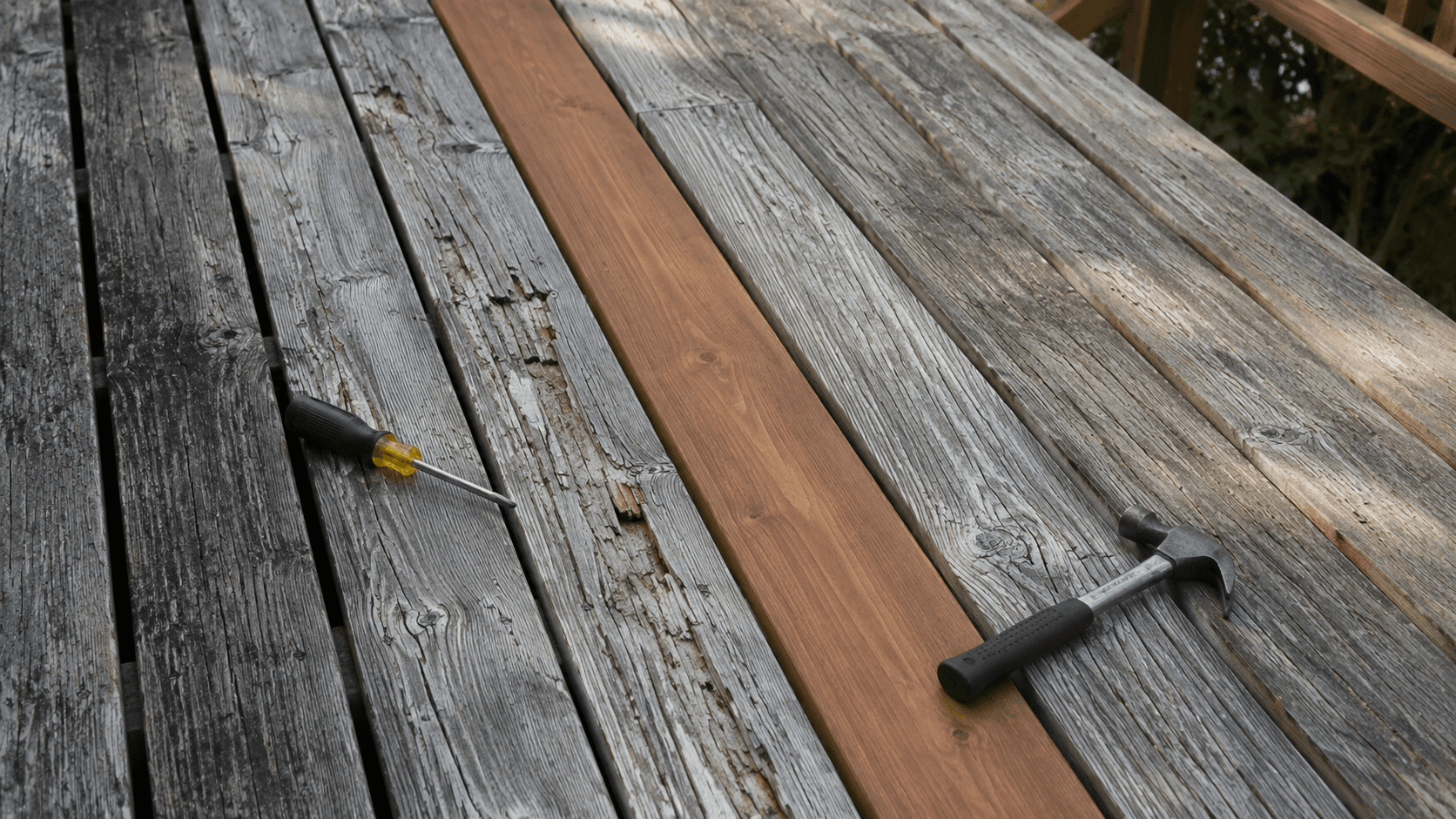
Repair or Replace Your Deck? Warning Signs to Check
A soft board or a wobbly railing does not always mean you need a new deck. Walk through our six-point inspection and learn which problems cost a few hundred dollars to fix and which mean it is time to rebuild.
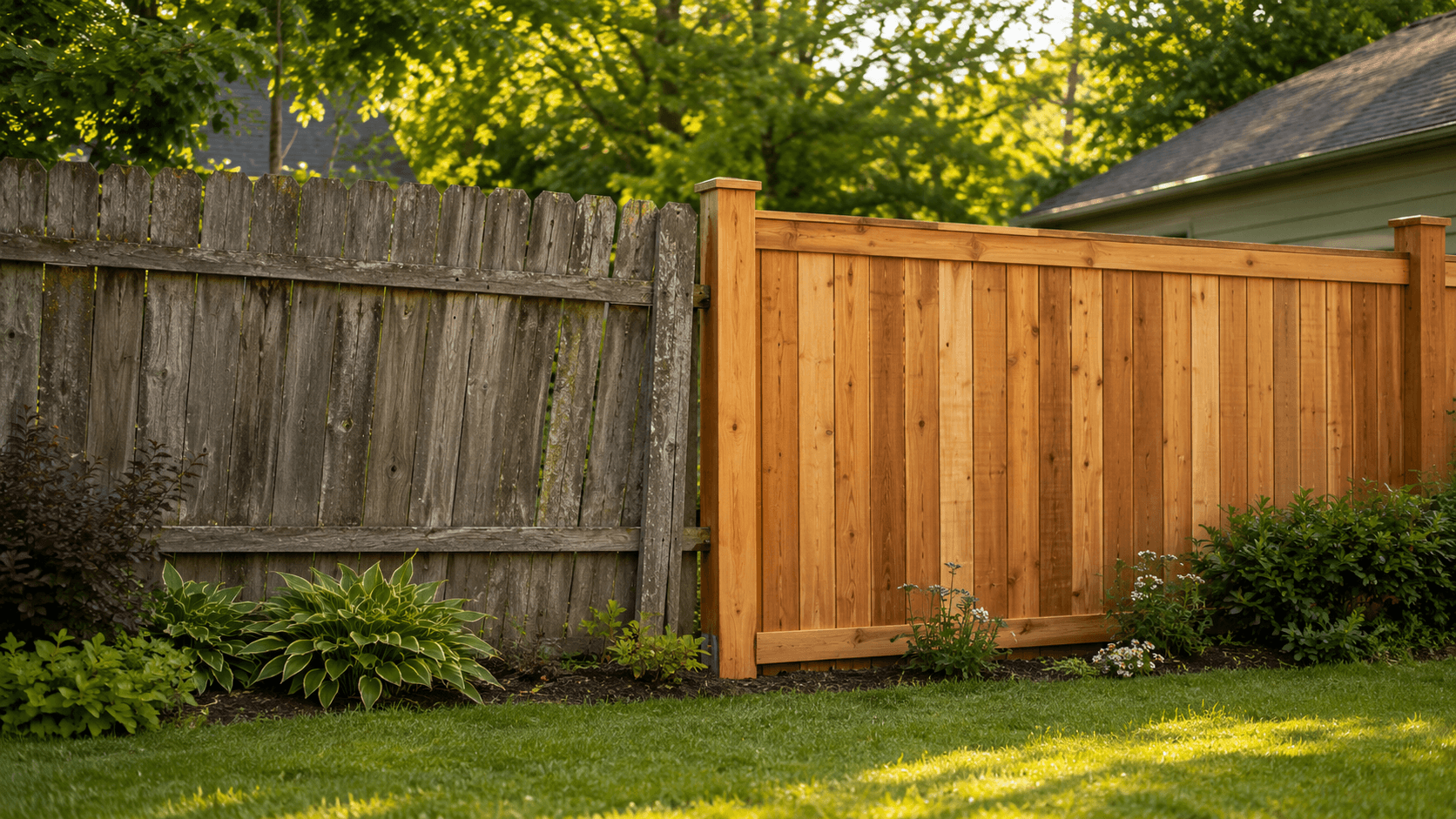
Fence Post Repair vs Replacement: Options and Costs
One leaning post does not mean a new fence. See what each fix really costs per post in 2026 and when replacement is the smarter spend.